Boat Safari vs Game Drive in Chobe National Park
Boat cruise or game drive in Chobe? This clear comparison shows what each delivers, what you’ll miss choosing one, and why doing both creates the full Chobe safari.
Last updated: August 10, 2026
Tourists planning Chobe safaris frequently ask “Should I do boat cruise or game drive?” and “Do I really need both or can I save money choosing just one?” Some visitors book only game drives assuming they’re the “real safari,” missing Chobe’s unique river cruises showing hippos, crocodiles, and swimming elephants impossible to see from vehicles. Others choose only boats because they seem easier and more relaxing, then discover they’ve missed lions, leopards, and interior wildlife that never appear along riverfront accessible to boats. The confusion stems from unclear explanations about what each activity delivers and whether doing both is essential marketing upsell or genuinely necessary for complete Chobe experiences.
At Chobe Tours, we’ve operated thousands of boat cruises and game drives over many years, understanding exactly what each activity offers and why the combination creates comprehensive safari experiences neither provides alone. This complete comparison covers boat cruises along the Chobe River showing water-based wildlife from unique perspectives, game drives through park interior accessing terrestrial predators and diverse habitats, key differences in wildlife viewing including what you’ll see on each and what you’ll miss doing only one, optimal combinations for 2-7 day safaris balancing both activity types, and honest guidance about when boats work better versus when drives excel. We explain why Chobe’s boat-and-drive combination distinguishes it from landlocked parks, helping you understand this isn’t optional upgrade but essential component of proper Chobe safari planning.
Do You Need Both?
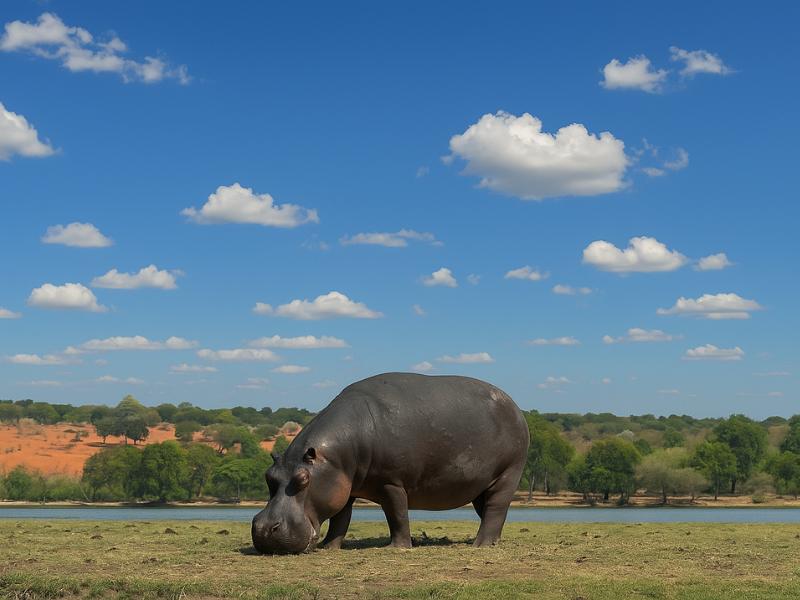
Yes, both boat cruises and game drives are essential for complete Chobe experiences, not optional alternatives where choosing one suffices. The activities complement rather than duplicate each other, accessing different wildlife species, viewing angles, and habitats that together create comprehensive safari coverage. Doing only game drives means missing guaranteed hippo and crocodile encounters, elephants swimming across channels, and water birds fishing from the Chobe River, while doing only boat cruises eliminates lions, leopards, interior wildlife, and terrestrial predators that never appear along the riverfront accessible to boats.
Why both matter starts with different wildlife accessed by each activity type. Boat cruises deliver near-guaranteed hippo sightings (95-99% probability), crocodile encounters (90-95%), close-up water bird viewing, and elephants at the river drinking and bathing, while game drives provide the only access to lions (60-80% multi-day odds), leopards (25-40%), interior buffalo herds, giraffe browsing woodland, and predator hunting behaviors. The wildlife overlap includes elephants visible from both but showing different behaviors (river drinking from boats, woodland feeding from drives), creating complementary rather than redundant viewing.
Different perspectives transform the same riverfront area into varied experiences with boats providing water-level viewing allowing eye-level encounters with hippos and elephants wading in shallows, while elevated vehicle positions offer top-down perspectives showing herd dynamics, territorial behaviors, and landscape context. The unique angles each activity provides make photographing elephants from boats (water reflections, swimming behaviors) completely different from vehicle photography (herd compositions, dust clouds, woodland browsing).
Habitats accessed differ fundamentally with boats restricted to Chobe River corridor covering just 2-3km inland from water, while game drives explore 50+ kilometers of riverfront roads plus interior mopane woodland, open floodplains, and seasonal marsh areas boats can never reach. The habitat variety means game drives encounter woodland specialists like kudu and giraffe, floodplain grazers like buffalo, and predators in interior territories, while boats access river specialists including hippos, crocodiles, fish eagles, and kingfishers.
Minimum recommendation for adequate Chobe introduction is 2 game drives plus 2 boat cruises totaling 4 activities across 2-day/1-night safari, providing one morning and one afternoon of each activity type. The 2+2 structure allows experiencing both land and water perspectives, morning and afternoon wildlife patterns, and essential species from elephants and hippos through attempt at lions and diverse plains game. Shorter 1-day trips forcing choice between activities deliver incomplete experiences missing half of what makes Chobe special.
Optimal balance maintains equal numbers of game drives and boat cruises regardless of total safari duration, with 3-day trips including 3-4 of each, 4-day safaris providing 4-5 of each, and extended stays alternating between activity types preventing monotony. The equal split ensures comprehensive coverage without over-emphasizing one perspective, maintains variety preventing repetition, and respects that neither activity type is inherently superior but rather complementary components of complete Chobe experiences.
Want to get it organized properly? This breakdown of how to plan a safari in Chobe tours covers all the details most people don’t think about until it’s too late.
| Factor | Boat Cruise | Game Drive |
|---|---|---|
| Primary Wildlife | Hippos (95-99%), crocodiles (90-95%), elephants at river, water birds | Lions (60-80%), leopards (25-40%), interior elephants, buffalo, giraffe, antelope |
| Viewing Perspective | Water level, eye-to-eye with animals, close approaches to river species | Elevated vehicle position, top-down views, landscape context |
| Habitats Accessed | Chobe River corridor only, 2-3km inland maximum | Riverfront + interior woodland + floodplains + varied ecosystems |
| Typical Duration | 2-3 hours | 3-4 hours |
| Physical Demands | Easy boarding, minimal movement, relaxed seating | Climbing in/out vehicles, bumpy roads, more active |
| Best For | Hippos, crocodiles, swimming elephants, water birds, relaxed viewing, stability | Lions, leopards, terrestrial predators, diverse habitats, active safari experience |
| Photography | Stable platform, water-level angles, river reflections | Elevated angles, varied subjects, terrestrial wildlife close-ups |
| Cost | $40-70 per person per cruise | $40-80 per person per drive |
| Essential Experiences | Hippo yawning displays, crocodile basking, elephants swimming, fish eagle calls | Lion sightings, leopard searches, buffalo herds, predator behaviors, woodland diversity |
| What You Miss Without It | All river wildlife, water-based viewing, hippo/croc guarantees, unique Chobe advantage | All predators, interior diversity, comprehensive coverage, traditional safari experience |
Boat Safaris: Chobe’s Unique Advantage
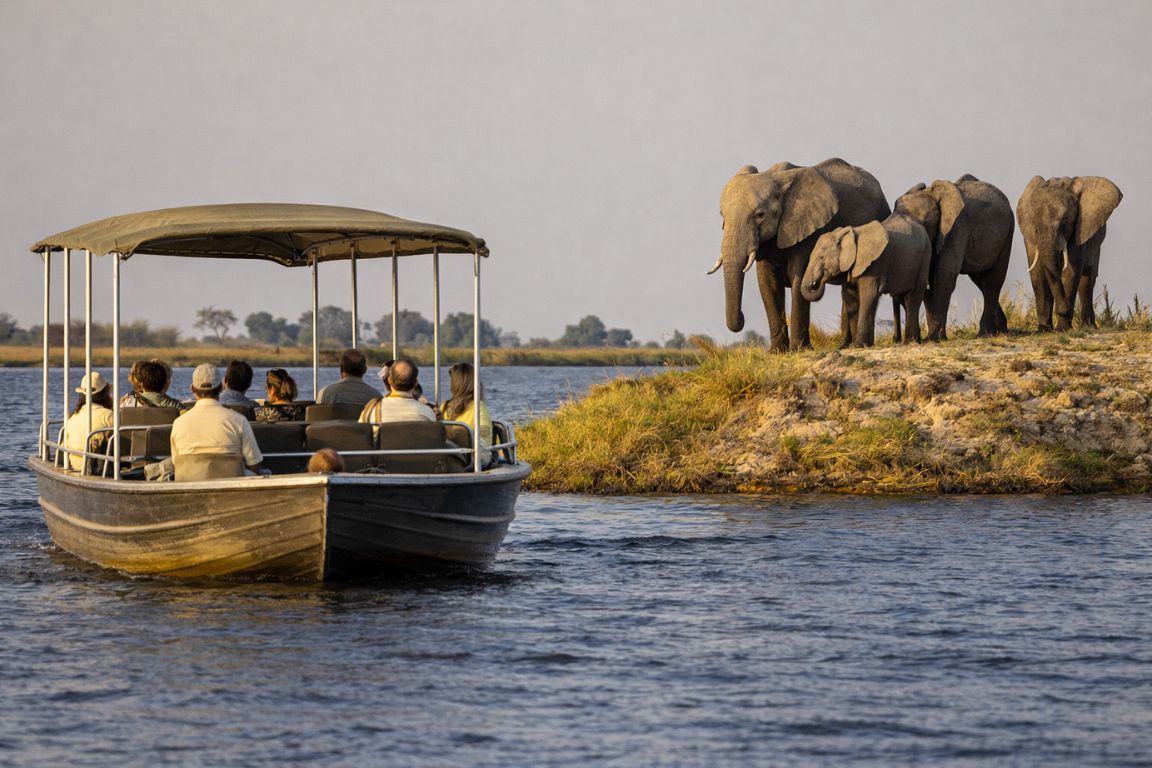
What makes Chobe special among African safari destinations is the opportunity for river safaris, uncommon across the continent where most famous parks are landlocked without navigable water bodies. While Kenya’s Masai Mara, Tanzania’s Serengeti, and South Africa’s Kruger rely entirely on vehicle-based viewing, Chobe’s permanent river allows boat cruises providing water-level wildlife encounters impossible in these landlocked parks. The river safari component distinguishes Chobe from competitors, creating unique selling proposition where visitors experience both traditional game drives and unusual boat-based wildlife viewing during single trips.
Typical boat cruise lasts 2-3 hours departing from Kasane marina or lodge jetties, using open-sided boats with bench seating accommodating 10-30 passengers depending on vessel size. The cruises follow Chobe River shoreline at slow speeds allowing wildlife observation, stopping engines when animals appear nearby for extended viewing, and positioning boats for optimal photography angles. Guides provide species identification and behavior interpretation while captains navigate channels, avoiding submerged hazards and maintaining safe distances from hippos and crocodiles.
Route and coverage follows the Chobe River shoreline between Kasane and Sedudu area covering approximately 20-30km of riverfront depending on cruise duration and wildlife locations. The boats travel along main river channel viewing animals on both Botswana and Namibian banks (river forms international border), explore side channels where hippo pods concentrate, and approach sandbanks where crocodiles bask and elephants drink. The routes vary daily based on recent sightings, water levels affecting channel access, and guide decisions positioning for best wildlife opportunities.
Boat types range from large double-decker pontoon boats carrying 25-35 passengers with upper and lower deck seating, to mid-size single-deck boats accommodating 15-25 passengers, to smaller vessels hosting 8-12 passengers in more intimate settings. Large stable pontoon boats provide best stability for seasickness-prone passengers and wheelchair accessibility, mid-size boats balance stability with maneuverability approaching closer to riverbanks, while smaller boats offer flexibility positioning optimally but show more rocking in waves.
Wildlife viewing angles from water level create dramatically different perspectives than elevated vehicle positions, allowing eye-to-eye encounters with drinking elephants, swimming hippos at same height, and close approaches to basking crocodiles impossible from land. The low angle captures water reflections in photographs, shows elephants wading in shallows with water surrounding them, and provides intimate scale understanding how massive hippos and elephants truly are when viewed at their level rather than looking down from vehicles.
Best times for boat cruises include morning departures 6-9am when animals remain active from overnight, temperatures stay cool and comfortable, and soft light provides excellent photography conditions. Afternoon cruises 3-6pm capture elephants arriving at river for evening drinking sessions typically 4-6pm, show hippos becoming more active as temperatures cool, and deliver spectacular sunset viewing as golden light illuminates animals against colorful skies. Morning cruises generally show more varied wildlife activity while afternoon cruises excel for concentrated elephant encounters.
What’s included in boat cruise pricing covers experienced guide providing wildlife identification and interpretation, boat captain navigating safely, life jackets available for all passengers (mandatory for children, optional for adults), and park entry fees included in quoted prices. Drinks vary by operator with budget cruises providing water only, mid-range including sodas and beer, and premium cruises offering cocktails and wine. Some operators provide light snacks or sundowner appetizers during afternoon cruises, though most focus primarily on wildlife viewing rather than elaborate catering.
Cost for boat cruises ranges $40-50 per person for budget operators using larger boats with 25-30 passengers, $50-60 mid-range pricing for quality boats with 15-20 passengers and drink inclusions, to $60-70 premium rates for smaller boats (8-12 passengers) with better positioning and comprehensive beverage service. Private boat charters cost $350-600 total for exclusive use accommodating 6-12 passengers depending on vessel, representing good value for groups of 6+ people versus individual pricing.
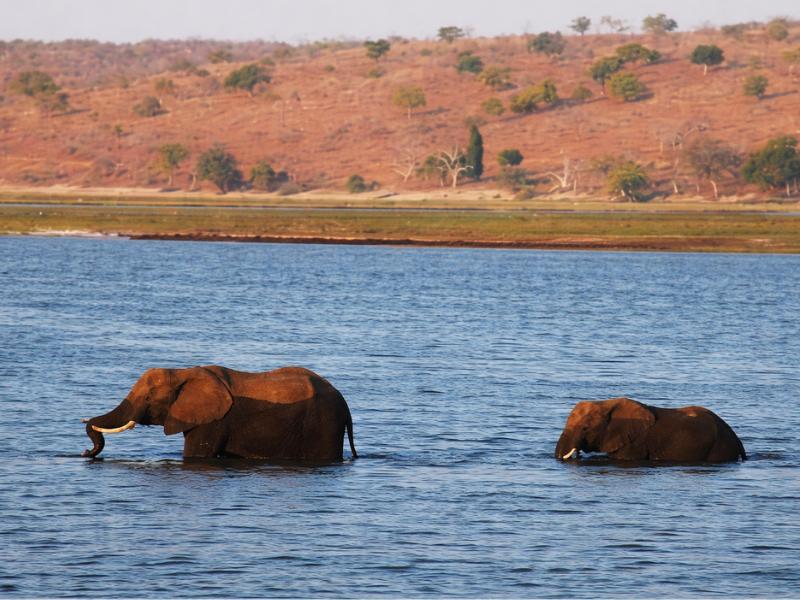
An afternoon boat cruise in August encountered a family group of 18 elephants approaching the river from woodland, walking single-file down the bank led by the matriarch. The entire herd entered the water together, with adults drinking deeply while calves played in shallows splashing each other. Then three adolescent males swam across a 40-meter channel to Namibian side, trunks raised like snorkels and powerful legs churning water while the boat positioned parallel capturing the crossing. The 25 passengers sat mesmerized watching the swimmers reach the far bank, shake off water, and disappear into vegetation while the rest of the family remained drinking on the Botswana side.
Planning ahead? Our guide to the best time to visit Chobe tours breaks down dry season versus green season and what each offers.
Game Drives: Traditional Safari Experience
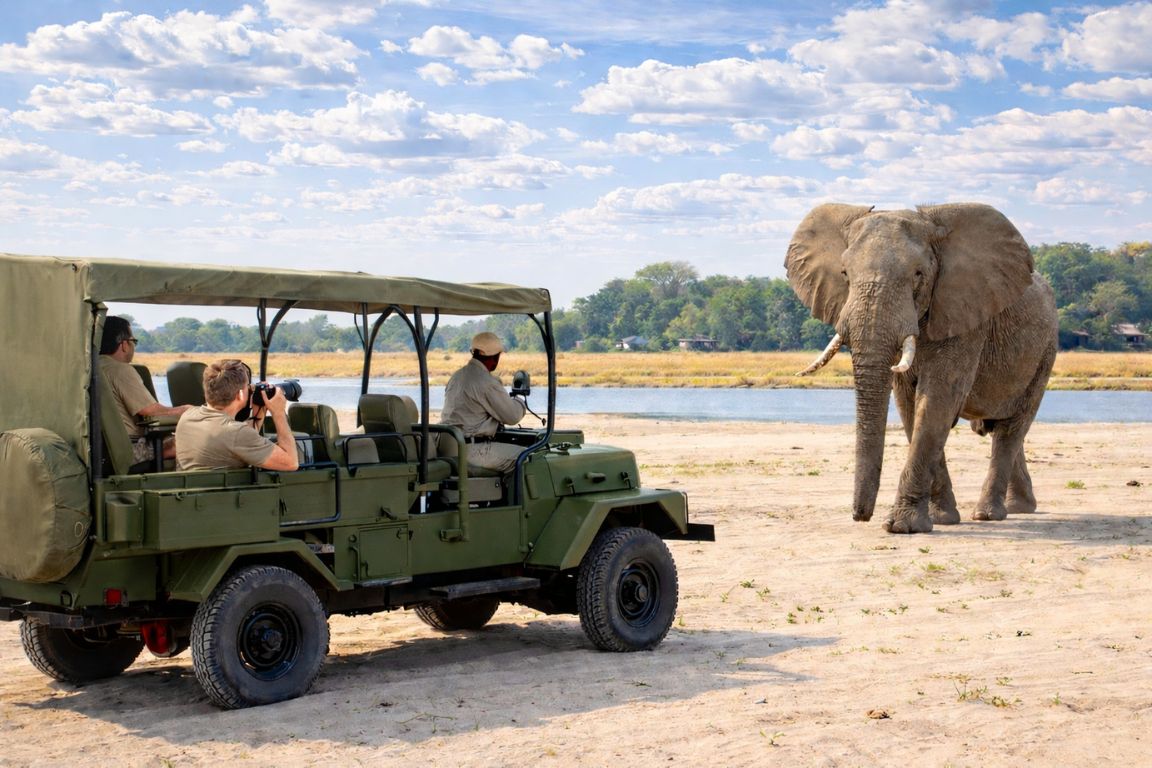
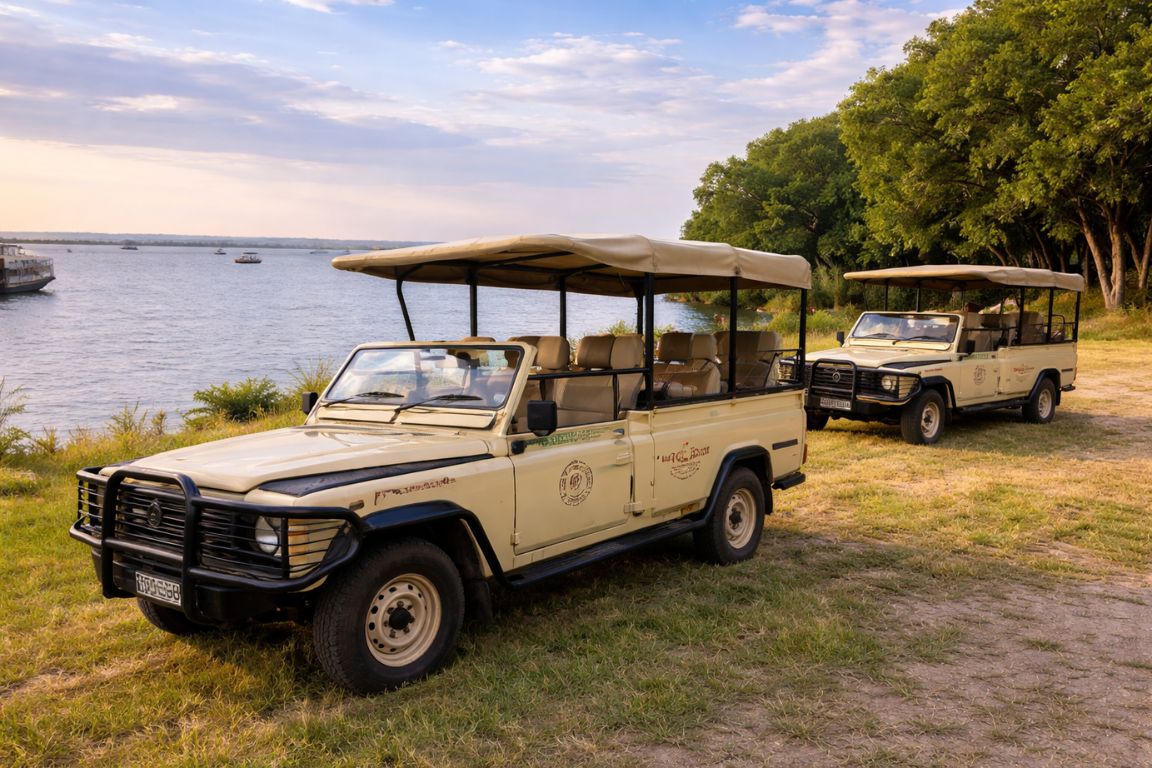
Classic safari format uses open 4×4 vehicles with tiered seating providing elevated viewing positions 2-3 meters above ground, accommodating 6-9 passengers in three rows of bench seats with canvas roofs providing sun protection but open sides allowing unobstructed wildlife viewing and photography. The elevated position offers superior vantage points for spotting distant animals across flat terrain, looking down into vehicles seeing herd dynamics and social interactions, and scanning across vegetation spotting animals that ground-level viewing would miss. Most vehicles feature individual seating positions ensuring every passenger gets window access rather than middle seats blocking views.
Typical duration for game drives runs 3-4 hours with morning departures around 6-6:30am returning by 9:30-10am for breakfast, and afternoon departures 3-3:30pm ending at 6-6:30pm sunset when park regulations require exiting. The extended duration compared to 2-3 hour boat cruises allows covering greater distances exploring varied habitats, spending extended time at productive wildlife sightings, and searching multiple areas for elusive predators requiring patience and persistence. Full-day game drives lasting 8-10 hours with picnic lunches occasionally get offered for visitors wanting maximum park coverage.
Routes covered include riverfront roads paralleling the Chobe River for 50+ kilometers between Kasane and Ngoma Gate accessing elephant concentrations and predator ambush sites, interior mopane woodland tracks where giraffe browse and kudu hide in thickets, open floodplain loops where buffalo herds graze and zebra congregate, and network of interconnected routes allowing guides to adjust based on recent sightings and animal movements. The route variety means no two drives follow identical paths, with guides customizing daily itineraries based on weather, previous day’s successes, and specific passenger interests.
Vehicle types range from purpose-built safari vehicles featuring tiered seating, pop-up roofs for standing viewing, reinforced suspension for rough terrain, and 360-degree open access designed specifically for wildlife viewing, to converted Toyota Land Cruisers with added bench seating, removed side panels, and basic modifications creating functional if less specialized safari platforms. Purpose-built vehicles provide superior comfort, visibility, and photography access justifying higher-end operator pricing, while converted Land Cruisers offer adequate functionality at budget price points.
Driving patterns follow stop-and-go rhythms with vehicles moving between sightings at 20-40 km/h, then stopping completely when animals appear allowing extended observation without engine noise disturbing wildlife or passengers. Guides position vehicles considering sun angles for photography, animal eye-level for best perspectives, and safety distances from dangerous species like elephants or buffalo. Radio communication between guides shares sighting locations allowing multiple operators to converge at major encounters like lion kills or leopard trees, though excessive radio chatter and vehicle crowding at popular sightings can diminish experience quality.
Best times for game drives prioritize early morning 6-9am when predators remain active after overnight hunting, herbivores feed before midday heat, and cool temperatures make extended driving comfortable for passengers. The soft morning light creates ideal photography conditions, animals show peak activity levels, and overall productivity typically exceeds afternoon sessions. Late afternoon 3-6pm drives capture predators waking from midday rest, elephants moving toward river, and spectacular sunset conditions, though wildlife activity generally stays lower than morning until final hour before dark.
What’s included in game drive pricing covers experienced guide providing wildlife identification, tracking skills, and interpretation, park entry fees for the day, and use of safari vehicle with guaranteed individual seating position. Drinks and snacks vary by operator with budget drives providing nothing beyond wildlife viewing, mid-range including bottled water, and premium operators offering coffee, tea, and light refreshments during bush stops. Some operators provide binoculars for passenger use, field guides for species identification, and sundowner drinks during afternoon drives.
Cost for game drives ranges $40-50 per person for budget operators using older vehicles with 9 passengers and minimal extras, $50-65 mid-range pricing for quality vehicles with 6-8 passengers and water provided, to $70-80 premium rates for purpose-built safari vehicles with maximum 6 passengers, comprehensive drink service, and experienced guides with superior tracking skills. Private vehicle charters cost $250-450 total for exclusive use accommodating 4-6 passengers, worthwhile for groups wanting customized itineraries and dedicated guide attention.
If you’ve never done a game drive before, here’s the game drive experience explained in Chobe tours so you show up prepared and know what you’re getting into.
Wildlife: What You’ll See on Each
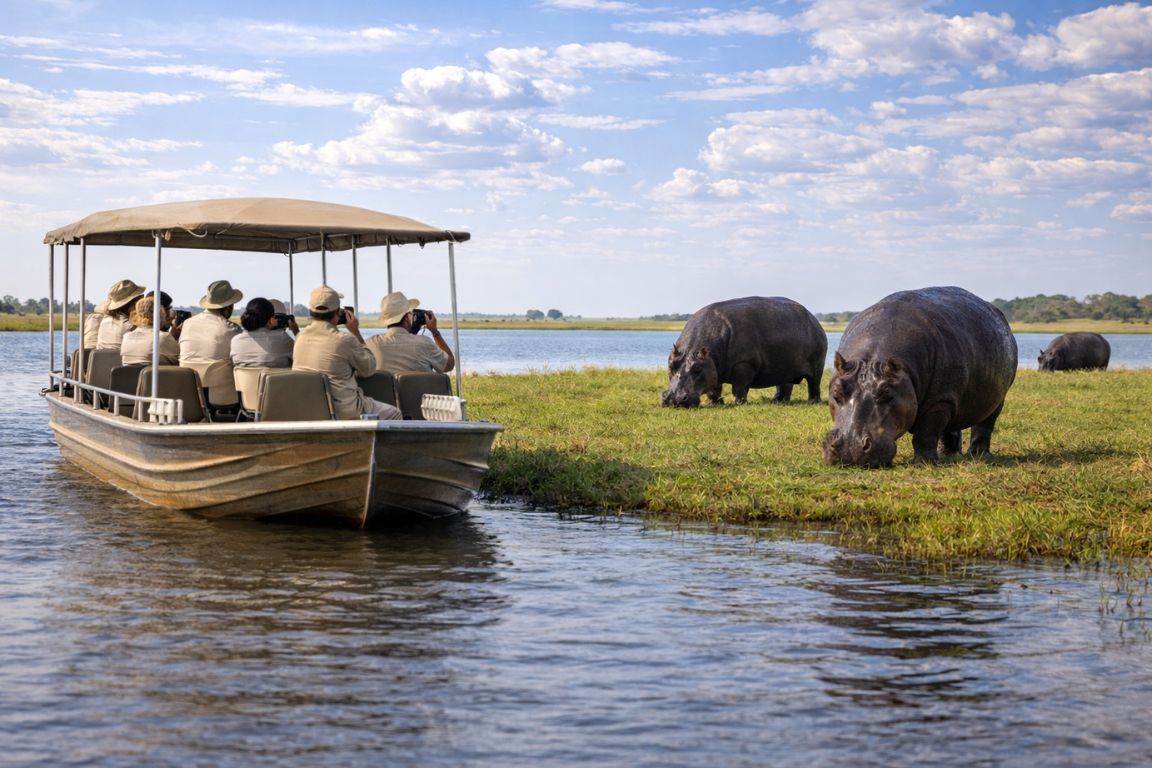 Boat cruise specialties center on river-dependent species with hippos appearing on 95-99% of cruises in resident pods of 20-100 individuals wallowing in shallows, yawning to display massive teeth, and engaging in territorial disputes. Crocodiles show on 90-95% of cruises basking on sandbanks with mouths open for thermoregulation, commonly 3-5 meters length with exceptional specimens reaching 5-6 meters. Swimming elephants create spectacular encounters as family groups cross channels with trunks raised as snorkels, calves paddling frantically beside mothers. Water birds include African fish eagles perching prominently in riverside trees, multiple kingfisher species (pied, malachite, giant) diving for fish, herons and storks wading shallows, and diverse waterfowl impossible to see from inland game drive routes.
Game drive specialties focus on terrestrial predators with lions best viewed from vehicle safety during morning drives when prides rest near kills or patrol territories, achieving 60-80% sighting odds on multi-day safaris. Leopards require vehicle access to dense riverine thickets and woodland where solitary cats hunt and rest in trees, with 25-40% encounter probability on 3-4 day trips. Interior wildlife including giraffe browsing acacias 4-6 meters high, kudu in woodland thickets, diverse antelope from impala through sable, and buffalo herds on open floodplains requires vehicle access to habitats boats can never reach. Wild dogs, cheetahs, and other rare predators appear exclusively on game drives as these species avoid riverfront areas boats access.
Elephants on both activities create complementary viewing experiences with boats showing river-focused behaviors including afternoon drinking sessions when 200-400 elephants gather simultaneously, bathing and swimming in water, and family interactions at water’s edge from eye-level perspectives. Game drives reveal woodland elephants feeding on mopane browse, dust bathing behaviors, breeding herds moving between feeding and drinking areas, and bachelor groups sparring in open terrain. The different contexts mean elephants viewed from boats appear as water-oriented animals while game drive elephants showcase terrestrial behaviors, feeding strategies, and movement patterns completing comprehensive understanding of species ecology.
Buffalo viewing works significantly better from game drives accessing open floodplains where herds of 300-1,000+ animals graze in full visibility, allowing observation of herd dynamics, bachelor groups, and massive aggregations stretching across grasslands. Boats occasionally see buffalo drinking at river’s edge but miss the spectacular floodplain concentrations and interior herds that game drives encounter regularly. The elevated vehicle positions provide overview perspectives showing entire herd compositions impossible from water-level boat viewing.
Birds divide clearly by habitat specialization with water birds including fish eagles, kingfishers, herons, storks, cormorants, and diverse waterfowl best viewed from boats cruising slowly along river allowing extended observation and photography. Woodland species including hornbills, rollers, shrikes, woodpeckers, and diverse smaller birds require game drive access to interior habitats where these species feed and nest. The bird diversity maximizes by combining both activities, with serious birders needing boats for water specialists and drives for woodland species.
Unique boat moments include watching elephants swim across channels with entire family groups entering water together, trunks raised and legs churning while calves struggle to keep pace beside mothers. Hippo close encounters allow observing yawning displays showing 50cm canines just 10-15 meters from boats, territorial bulls roaring warnings, and pods moving through water surrounding vessels. Fish eagles fishing provide action shots as birds swoop down snatching fish from surface with powerful talons, plus carmine bee-eater colonies in August-November showing hundreds of brilliant red birds nesting in riverbank cliffs visible only from water.
Unique drive moments include witnessing predator hunts as lions stalk buffalo or antelope across floodplains, leopards descending from trees where they’ve cached kills, and the tense atmosphere when prey species show alarm behaviors indicating nearby predators. Giraffe browsing acacias demonstrates specialized feeding at heights only these animals reach, antelope variety from tiny duikers through massive sable showcases habitat diversity, and interior wilderness atmosphere with no other humans visible creates authentic bush immersion impossible along busy riverfront boat routes. The active searching and tracking aspects of game drives deliver adventure and discovery absent from relaxed boat viewing.
If you’re going for the wildlife, here’s our breakdown of the animals in Chobe tours so you can set realistic expectations before you arrive.
| Species/Experience | Best Viewing Activity | Sighting Probability | Why This Activity is Better |
|---|---|---|---|
| Hippos | Boat cruise (strongly) | 95-99% boats, 20-30% drives | Close water-level viewing, pods in habitat, yawning displays |
| Crocodiles | Boat cruise (strongly) | 90-95% boats, 30-40% drives | Basking on banks, close approaches, natural river habitat |
| Lions | Game drive (strongly) | 60-80% drives, 5-10% boats | Vehicle safety allows close viewing, interior territories, hunting areas |
| Leopards | Game drive (exclusively) | 25-40% drives, under 5% boats | Dense vegetation access, tree viewing, interior habitat |
| Elephants | Both (different behaviors) | 95-99% both | Boats show river drinking/swimming, drives show woodland feeding/movement |
| Buffalo | Game drive (strongly) | 80-90% drives, 40-50% boats | Floodplain herd viewing, interior concentrations, open terrain |
| Giraffe | Game drive (exclusively) | 60-80% drives, under 5% boats | Woodland habitat, interior range, never at riverfront |
| Water Birds | Boat cruise (strongly) | 90-95% boats, 30-40% drives | Habitat access, close viewing, photography angles |
| Woodland Birds | Game drive (strongly) | 70-80% drives, 20-30% boats | Interior habitat access, diverse ecosystems |
| Swimming Elephants | Boat cruise (exclusively) | 30-50% boats, impossible drives | Water-based behavior, channel crossings, unique perspective |
| Predator Hunts | Game drive (exclusively) | 10-20% drives, impossible boats | Active tracking, interior hunting grounds, extended observation |
| Antelope Variety | Game drive (strongly) | 90-95% drives, 40-50% boats | Diverse habitat access, woodland/floodplain species, comprehensive coverage |
Photography: Boats vs Vehicles
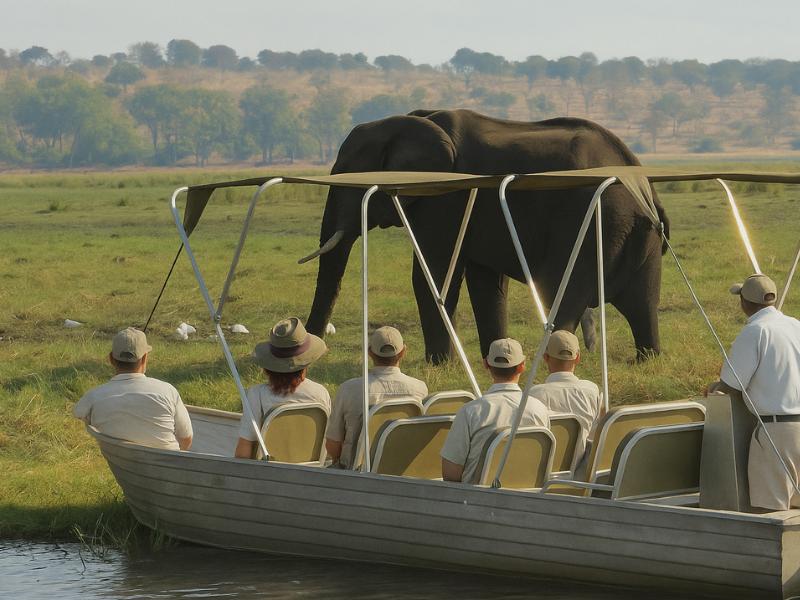
Boat photography advantages start with stable platforms as boats glide smoothly on calm Chobe River water creating minimal vibration compared to bouncing vehicles, allowing slower shutter speeds and steadier compositions. Water-level angles capture unique perspectives with elephants wading in shallows, hippo eye-level encounters showing scale and intimacy, and water reflections doubling visual impact in images. Close approaches to basking crocodiles (5-10 meters safely) and hippo pods (10-15 meters) deliver frame-filling shots impossible from distant vehicle viewing, while the open boat sides provide unobstructed 360-degree access without vehicle posts or other passengers blocking compositions.
Boat photography challenges include distance from terrestrial animals on riverbanks where elephants drinking or buffalo herds remain 30-50+ meters away requiring longer telephoto lenses, and inability to reposition boats quickly when better angles appear as captains must maneuver large vessels carefully. Afternoon boat cruises face problematic backlighting as sun sets behind Namibian bank creating silhouetted subjects unless photographers specifically desire silhouettes, while morning light works better for frontal lighting. The limited habitat access means missing interior wildlife entirely, with boats restricted to river corridor capturing only animals visiting water rather than comprehensive species diversity.
Vehicle photography advantages include elevated positions 2-3 meters above ground providing top-down perspectives showing herd dynamics, predator stalking behaviors, and landscape context impossible from water level. Closer approaches to terrestrial predators particularly lions (20-30 meters safely from vehicles) deliver intimate portraits and behavioral shots, while ability to reposition vehicles quickly allows adjusting for optimal light angles and compositions. Better light control comes from drivers positioning considering sun angles, photographers requesting specific vehicle placement, and flexibility moving throughout day as light changes.
Vehicle photography challenges center on constant bouncing and vibration from rough roads requiring faster shutter speeds (1/1000+ second minimum) preventing slower creative techniques, and dust clouds kicked up by moving vehicles coating equipment and obscuring subjects during dry season. Other passengers potentially blocking shots as multiple people photograph simultaneously in confined vehicle space, engine vibration transferring through vehicle body to cameras and lenses reducing sharpness, and vehicle posts or canvas roof supports occasionally obstructing perfect compositions. The moving platform means missed shots when drivers don’t stop quickly enough or continue moving during critical moments.
Best lens choices for both activities emphasize telephoto zooms with 100-400mm or 150-600mm covering most situations from distant elephants through close hippo encounters, allowing flexibility without changing lenses in dusty bouncing conditions. Wide-angle lenses (16-35mm or 24-70mm) prove more useful on boats for environmental shots including elephants in landscape context and group passengers enjoying cruises, while less valuable on bumpy game drives where wide angles accentuate vehicle motion blur. Prime telephoto lenses (400mm, 500mm, 600mm) deliver superior sharpness but sacrifice flexibility that zoom versatility provides when subjects appear at varied distances.
Light conditions favor morning boat cruises 6-9am with sun rising behind passengers creating frontal lighting on river’s Namibian bank, though morning light works equally well for game drives. Afternoon boats face challenging backlighting 4-6pm as sun sets behind western Namibian bank, requiring photographers to accept silhouettes or position boats carefully for side lighting, while afternoon game drives provide better light control repositioning vehicles for optimal angles. The optimal timing for photography prioritizes morning activities for both boats and drives when possible, accepting afternoon compromises or specifically planning silhouette creative compositions during boats.
A professional wildlife photographer from Germany spent 5 days in Chobe shooting 15,000+ images and told us afterward that boats provided his favorite shots despite expecting vehicles to dominate his portfolio. The water-level elephant encounters with reflections, hippo yawning displays filling his frame at 10 meters, and stable platform allowing 1/500 second shutter speeds created intimate powerful images. Another serious photographer the same week preferred game drives, citing the lion pride at kill, leopard in marula tree at dawn, and diverse antelope species across varied habitats delivered more portfolio variety than repetitive riverfront elephants and hippos from boats.
Recommended tours by season
Chobe National Park Tour: Full-Day Safari + Boat Cruise (Botswana)
A 10-hour day from Victoria Falls: morning 4×4 game drive, lunch, then an afternoon river cruise. Water and park fees included.
Chobe National Park Tour: Full Day with River Cruise
A full day in the park built around a river cruise. Use this if water-level viewing is the main gap in a drive-only plan.
Chobe National Park: Overnight Trip with Night Drive, Village & Camping
Afternoon boat cruise, night drive, and a sunrise game drive, with camping and a village visit. Listed at 24 hours.
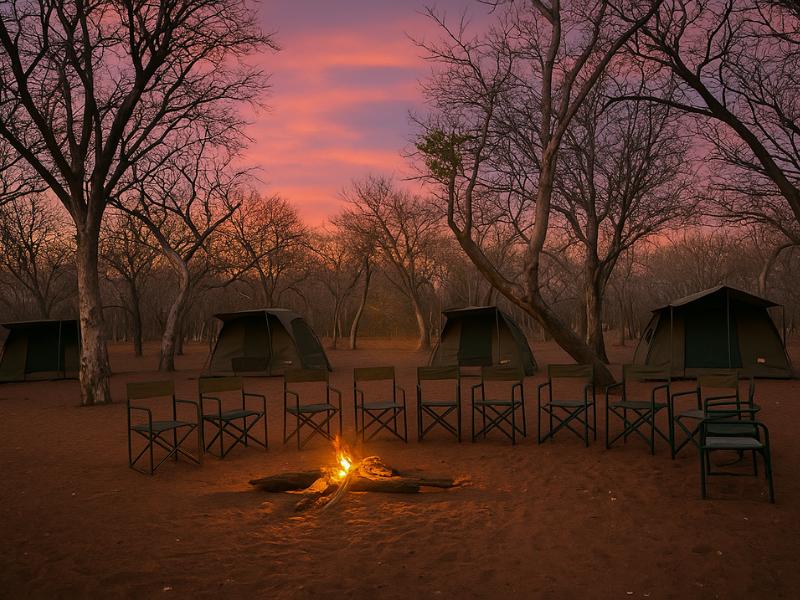
3-Day Chobe Safari Tour from Livingstone/Victoria Falls
Three days and two nights from Livingstone or Victoria Falls. Closer to the stay length needed for several drives and several cruises.
Timing and Scheduling Considerations
Morning options show game drives departing earlier at 6-6:30am to capitalize on predator activity and cool temperatures, returning by 9:30-10am for full breakfast at lodges. Boat cruises start slightly later at 6:30-7am as early departures face cold conditions on open water with wind chill making 6am uncomfortable, returning around 9-9:30am. The 30-60 minute difference means morning game drives capture absolute first light and predator peak activity, while morning boats offer slightly more comfortable temperatures though potentially missing very early wildlife behaviors. Both activities work well for morning schedules, with game drives having slight edge for serious predator seekers willing to brave cold starts.
Afternoon options begin identically at 3-3:30pm for both boats and drives, ending at sunset around 6-6:30pm when park regulations require exiting and darkness prevents safe wildlife viewing. The synchronized timing means no scheduling advantage either direction, with both activities capturing late afternoon animal movements, golden hour photography light, and spectacular sunset conditions. Afternoon elephant viewing typically favors boats as herds arrive at river 4-6pm, while afternoon game drives excel for predators waking from midday rest and beginning evening hunts.
Duration differences between 2-3 hour boat cruises and 3-4 hour game drives affect daily scheduling with boats requiring less time commitment and creating more flexibility for other activities or lodge relaxation. The shorter boat duration works well for travelers wanting wildlife viewing without full morning or afternoon time blocks, families with children whose attention spans limit tolerance for extended activities, and visitors combining Chobe with tight Victoria Falls schedules. Longer game drive duration provides more comprehensive park coverage but requires committing larger schedule blocks and accepting extended periods in vehicles on bumpy roads.
Same-day combinations pairing morning game drive with afternoon boat cruise (or vice versa) create full-day safari experiences covering both activity types and maximizing wildlife variety. The typical structure involves 6am game drive returning 9:30-10am for breakfast and rest, then 3pm boat cruise ending 6pm for dinner, providing balanced schedule with midday recovery time preventing exhaustion. Alternatively, morning boat 6:30am returning 9:30am followed by afternoon drive 3pm-6:30pm reverses the sequence with equal effectiveness. Two-day minimum stays should include one morning and one afternoon of each activity type rather than all morning or all afternoon concentrating in single time period.
Scheduling around meals requires understanding activity timing relative to lodge dining. Morning game drives depart before breakfast with light coffee/tea and snacks, returning for full breakfast 9:30-10am, while morning boats similarly depart pre-breakfast returning for late breakfast. Afternoon activities start after lunch around 3pm, ending at sunset requiring dinner pushed to 7-7:30pm or later. The meal timing works naturally with most lodge schedules though travelers accustomed to early dinners may find 7:30-8pm dining late. Full-day safaris include picnic lunches in the bush, disrupting normal meal patterns but providing authentic safari atmosphere.
Weather considerations affect boats more severely than game drives, with wind above 20mph creating uncomfortable choppy conditions and spray soaking passengers, while rain forces boat cancellations due to lightning dangers and passenger exposure. Game drives handle wind and light rain better through partially enclosed vehicles providing protection, though heavy rain makes roads muddy and animal viewing challenging. The weather sensitivity means afternoon thunderstorms during wet season November-April more frequently cancel boat cruises than game drives, making drives more reliable activity during changeable weather periods.
Seasonal timing shows both activities working excellently during dry season May-October when calm weather, concentrated wildlife, and reliable conditions create optimal experiences for boats and drives equally. Wet season November-April favors game drives as thick vegetation, dispersed animals, and unpredictable weather compromise both activities but affect boats more severely through river level changes, afternoon storms, and reduced riverfront wildlife concentrations. The seasonal differences aren’t dramatic enough to eliminate boats entirely during wet season, but travelers visiting November-April should expect game drives delivering better consistent value than weather-dependent boat cruises.
Combining Both: The Optimal Approach
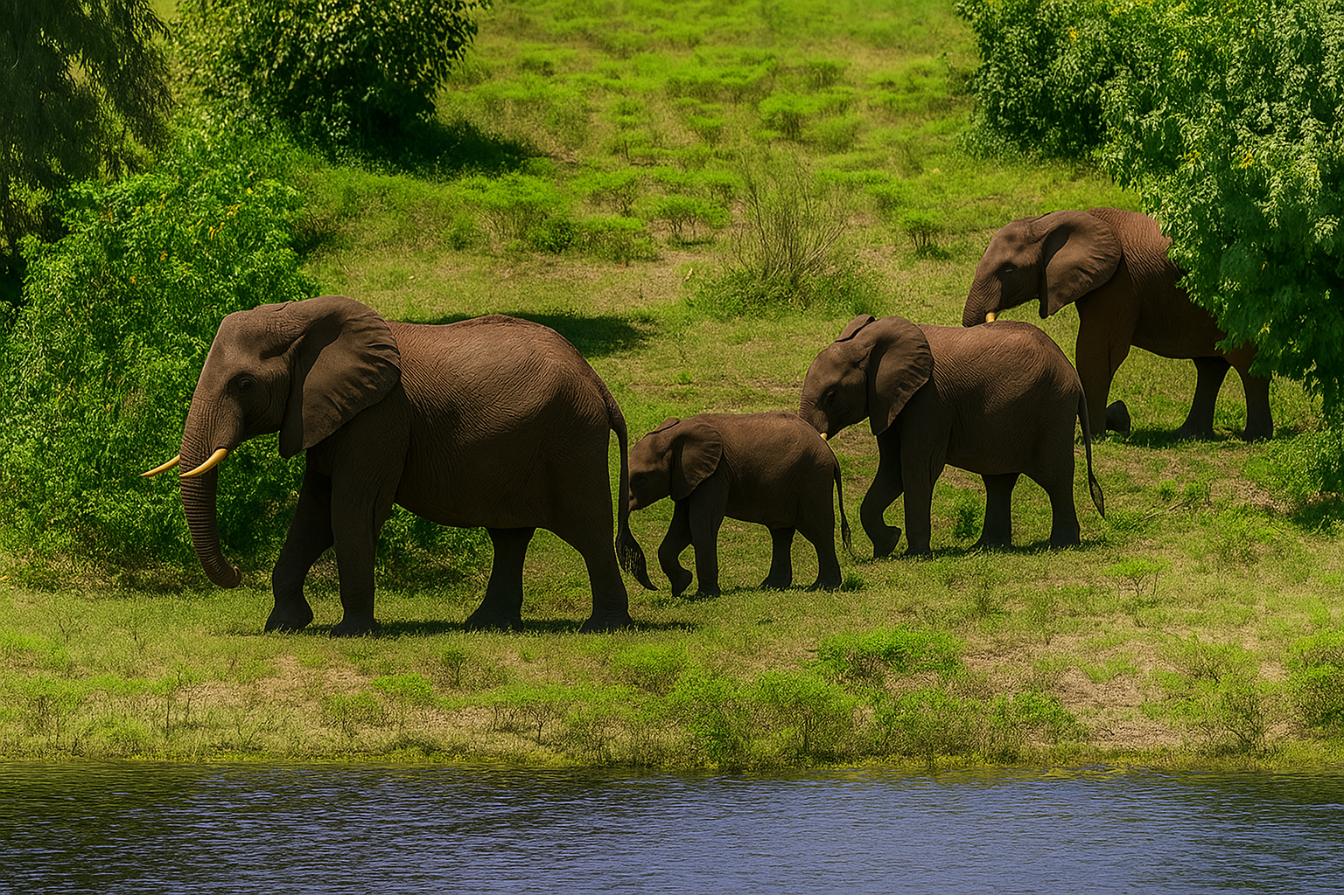
Why combination works best centers on complementary experiences where boats and game drives cover different wildlife, habitats, and perspectives that together create comprehensive Chobe safaris neither provides alone. Boats deliver guaranteed hippos and crocodiles, water-level elephant encounters, and river specialties while game drives access lions, leopards, interior wildlife, and terrestrial predators, with minimal overlap beyond elephants showing different behaviors on each. The combination prevents missing half of Chobe’s signature species and experiences, with visitors doing only boats never seeing predators or interior diversity while those doing only drives missing guaranteed river giants and unique water-based viewing angles.
2-day itinerary as minimum adequate duration includes 2 game drives plus 2 boat cruises totaling 4 activities, typically structured as afternoon arrival with first activity (drive or boat), full second day with morning and afternoon activities alternating types, then morning departure day with final activity. Example schedule: Day 1 afternoon boat 3-6pm, Day 2 morning drive 6-9:30am and afternoon drive 3-6pm, Day 3 morning boat 6:30-9:30am before departure. The structure provides one morning and one afternoon of each activity type, covering essential wildlife with adequate variety preventing repetition while stopping before diminishing returns affect shorter trips.
3-day itinerary allows 3-4 of each activity type creating more comprehensive coverage with flexibility for weather buffers, second attempts if initial outings disappoint, and relaxed pacing with lodge downtime. Example schedule: Day 1 afternoon boat, Day 2 morning drive and afternoon boat, Day 3 morning boat and afternoon drive, Day 4 morning drive before departure, totaling 3 boats and 4 drives across full days with alternating pattern maintaining variety. The additional day compared to 2-day minimum significantly improves lion and leopard odds through extra searching time, provides multiple elephant encounters showing varied behaviors, and creates balanced experience without excessive rushing.
4-day itinerary delivers 4-5 of each activity providing comprehensive Chobe coverage with weather and luck buffers, second chances at elusive species, and thorough exploration of varied habitats from riverfront through interior woodland to remote areas. Example schedule: Day 1 afternoon drive, Day 2 morning boat and afternoon drive, Day 3 morning drive and afternoon boat, Day 4 morning boat and afternoon drive, Day 5 morning drive before departure, totaling 5 drives and 4 boats with alternating pattern. The extended duration allows revisiting particularly productive areas at different times, exploring varied park sectors, and maintaining engagement through activity variety without repetition that longer single-activity focus creates.
Sequencing strategies present options starting with boat cruises as easier gentler introduction for first-time safari visitors, families with children, or travelers uncertain about wildlife enthusiasm, allowing comfortable entry before committing to more demanding game drives. The relaxed boat atmosphere, guaranteed hippo and crocodile encounters, and stable platform create positive first impressions building confidence for subsequent drives. Alternatively starting with game drives delivers immediate excitement and adventure for experienced travelers, serious wildlife enthusiasts, or visitors wanting maximum engagement from first activity, capitalizing on fresh energy and peak enthusiasm. The sequencing choice matters less than ensuring alternating pattern throughout trip rather than clustering all boats or all drives together.
Package deals combining multiple drives and boats in bundled pricing deliver 10-20% savings versus booking activities separately, with operators incentivizing multi-day comprehensive packages over single activity bookings. Example pricing shows 2 drives plus 2 boats purchased separately costing $160-300 total ($40-75 each), while 4-activity packages cost $140-250 representing $20-50 savings. The bundled approach also simplifies logistics through single booking handling all activities, transfers, and coordination versus managing multiple separate reservations with different operators. Three and four-day packages show even better per-activity rates as savings increase with duration, making combined bookings clearly superior value propositions.
Can’t decide on length? I’ve compared multi-day vs day trip in Chobe tours so you can see what you actually gain by staying longer.
Costs and Value Comparison
Boat cruise pricing ranges $40-50 per person for budget operators using large boats carrying 25-30 passengers with basic water provided, $50-60 mid-range for quality boats with 15-20 passengers including soft drinks and beer, to $60-70 premium rates for smaller vessels (8-12 passengers) with better positioning flexibility and comprehensive beverage service including wine and cocktails. The per-person costs remain relatively consistent across operators within quality tiers, with primary price differences reflecting boat size, passenger capacity, drink inclusions, and guide experience rather than dramatic quality variations in core wildlife viewing.
Game drive pricing spans wider range at $40-50 budget level using older vehicles with 9 passengers and minimal extras, $50-65 mid-range for quality vehicles with 6-8 passengers and water provided, to $70-80 premium rates for purpose-built safari vehicles carrying maximum 6 passengers with comprehensive refreshments and highly experienced guides. The broader price spectrum reflects greater equipment variation between budget converted Land Cruisers and premium purpose-built safari vehicles, plus significant guide quality differences affecting wildlife finding success and interpretation depth.
Package combinations bundling multiple activities deliver 10-20% savings versus separate bookings, with 2-day packages including 2 drives plus 2 boats costing $140-250 combined versus $160-300 booking individually. Three-day packages with 6-8 activities cost $350-550 representing $50-100 savings, while 4-day comprehensive packages totaling 8-10 activities run $500-750 saving $80-150 versus individual pricing. The percentage savings increase with duration as operators incentivize longer commitments, making multi-day packages clearly superior value beyond convenience benefits of single booking handling all logistics.
If you’re trying to figure out what to pack, here’s our safari packing list in Chobe tours based on what actually works in the field – not just what the brochures say.
What affects pricing includes seasonal variations with peak July-September commanding 20-30% premiums over shoulder season May-June and October rates, operator quality and reputation with established companies charging more than budget startups, inclusions like drinks and snacks adding $5-15 per activity, and private versus shared arrangements creating dramatic cost differences. Lodge location affects pricing as properties inside park boundaries include activities in accommodation rates while Kasane town lodges require separate activity bookings, and group size influences per-person costs through economies of scale.
Value assessment considering cost per hour shows boats at $40-70 for 2.5 hours averaging $16-28 hourly while drives at $40-80 for 3.5 hours average $11-23 hourly, making drives marginally better pure time value. Wildlife variety per dollar favors game drives covering 25-40 species versus boats showing 15-25 species, though boats guarantee rare hippo and crocodile encounters impossible on drives creating unique value beyond simple species counts. The value equation balances financial costs against experience quality, with both activities delivering good value at competitive prices relative to other African safari destinations.
Budget optimization for travelers with limited funds prioritizes booking 2-day packages ensuring both activity types over extending duration doing only one type, choosing shoulder season May-June or October for 25-35% savings versus peak rates, selecting mid-range operators delivering quality experiences without premium pricing, and forming small groups of 4-6 people splitting private vehicle or boat costs achieving better per-person rates than shared options. Skipping premium drink inclusions and fancy lodge amenities allows redirecting funds toward additional activities, with more game drives and boat cruises delivering greater value than luxury accommodations with fewer wildlife outings.
Premium options include private boat charters at $350-600 total accommodating 6-12 passengers depending on vessel, representing excellent value for groups of 6+ people at $50-100 per person versus $50-70 individual shared cruise pricing while gaining exclusive guide attention and flexible timing. Private vehicle charters cost $250-450 total for 4-6 passengers, breaking even around 4-5 people versus shared drive pricing while providing customized itineraries, dedicated guide, and ability to spend extended time at productive sightings without accommodating other passengers’ preferences. The premium options suit photographers wanting specific positioning, families with children needing flexibility, and travelers prioritizing privacy over cost savings.
We’ve got safari costs explained in Chobe tours based on what’s included, what’s extra, and where operators typically markup prices.
| Option | Activity Type | Passengers | Duration | Cost Per Person | Total Cost | Best For |
|---|---|---|---|---|---|---|
| Budget Boat | Boat cruise | 25-30 shared | 2-3 hours | $40-50 | $40-50 | Budget travelers, guaranteed water wildlife |
| Mid-Range Boat | Boat cruise | 15-20 shared | 2-3 hours | $50-60 | $50-60 | Most visitors, drinks included, quality experience |
| Premium Boat | Boat cruise | 8-12 shared | 2-3 hours | $60-70 | $60-70 | Better positioning, comprehensive drinks, smaller groups |
| Private Boat | Boat cruise | 6-12 exclusive | 2-3 hours | $50-100 (depends on group size) | $350-600 total | Groups 6+, photographers, families, privacy |
| Budget Drive | Game drive | 9 shared | 3-4 hours | $40-50 | $40-50 | Budget travelers, basic wildlife viewing |
| Mid-Range Drive | Game drive | 6-8 shared | 3-4 hours | $50-65 | $50-65 | Most visitors, quality vehicles, good guides |
| Premium Drive | Game drive | 6 shared | 3-4 hours | $70-80 | $70-80 | Purpose-built vehicles, expert guides, comprehensive service |
| Private Drive | Game drive | 4-6 exclusive | 3-4 hours | $50-90 (depends on group size) | $250-450 total | Groups 4+, photographers, customized itineraries |
| 2-Day Package | 2 drives + 2 boats | Shared | 4 activities | $140-250 total | $140-250 | Minimum adequate, both activity types, value pricing |
| 3-Day Package | 3-4 drives + 3-4 boats | Shared | 6-8 activities | $350-550 total | $350-550 | Optimal balance, comprehensive coverage, best value per activity |
| 4-Day Package | 4-5 drives + 4-5 boats | Shared | 8-10 activities | $500-750 total | $500-750 | Thorough coverage, weather buffers, maximum variety |
FAQ: Boat Safari vs Game Drive in Chobe
1. Which is better – boat safari or game drive in Chobe?
Neither is better – both are essential and complementary. Boats guarantee hippos (95-99%), crocodiles (90-95%), water birds, and water-level elephant encounters. Game drives provide lions (60-80%), leopards (25-40%), interior wildlife, and terrestrial predators. You need both for complete Chobe experience covering all signature species and habitats.
2. Do I need to do both boat cruise and game drive?
Yes, absolutely. Doing only boats means missing lions, leopards, giraffe, interior buffalo herds, and comprehensive terrestrial wildlife. Doing only drives eliminates guaranteed hippos, crocodiles, swimming elephants, and unique water-based perspectives. Minimum 2 drives plus 2 boats (2-day safari) required for adequate Chobe introduction.
3. What animals can you see on a boat cruise?
Hippos (95-99% guaranteed), crocodiles (90-95%), elephants at river drinking and swimming, water birds including fish eagles and kingfishers, occasional buffalo drinking, and diverse waterbirds. You won’t see lions, leopards, giraffe, or interior wildlife as boats access only river corridor not park interior.
4. Are game drives better than boat safaris for seeing elephants?
Different not better – both show elephants in complementary ways. Boats deliver afternoon river drinking sessions with 200-400 elephant herds, swimming behaviors, and water-level encounters. Game drives show woodland feeding elephants, movement between areas, dust bathing, and terrestrial behaviors. Need both for complete elephant viewing.
5. Which is better for photography – boat or vehicle?
Boats offer stable platforms, water-level angles, close hippo/croc shots, and water reflections. Vehicles provide elevated perspectives, closer terrestrial predator access, better light control, and subject variety. Serious photographers need both – boats excel for river wildlife, vehicles for predators and diverse species.
6. How long are boat cruises vs game drives?
Boat cruises run 2-3 hours typically, game drives last 3-4 hours. Morning drives start 6am (boats 6:30-7am), both afternoon activities start 3-3:30pm ending at sunset 6-6:30pm. Drives provide longer duration and greater habitat coverage than boats.
7. Which is more expensive – boat safari or game drive?
Similar pricing – boats $40-70 per person, drives $40-80 per person. Drives slightly more expensive reflecting longer duration (3-4 hours vs 2-3 hours). Package deals combining both deliver 10-20% savings versus booking separately, making combined bookings best value.
8. Can you see lions on boat cruises?
Extremely rare (under 5% probability) as lions avoid riverfront areas boats access, preferring interior territories. Boats occasionally see lions drinking at river’s edge but reliable lion viewing requires game drives accessing predator hunting grounds and ambush sites. Never choose boats expecting lion sightings.
Glossary: Chobe Safari Activity Terms
Boat Cruise/River Safari: Wildlife viewing activity along Chobe River using motorized boats carrying 10-30 passengers, lasting 2-3 hours, accessing hippos, crocodiles, elephants at river, and water birds. Unique to Chobe compared to most African parks lacking navigable rivers.
Game Drive/Safari Drive: Traditional safari activity using open 4×4 vehicles carrying 6-9 passengers, lasting 3-4 hours, exploring park interior for lions, leopards, elephants, buffalo, and diverse wildlife across varied habitats.
Open Vehicle: Purpose-built or converted 4×4 with removed side panels, tiered bench seating, canvas roof, and elevated positions 2-3 meters above ground providing unobstructed wildlife viewing and photography access.
Pontoon Boat: Large stable flat-bottomed boat with double-decker seating carrying 25-35 passengers, offering maximum stability for seasickness-prone passengers and wheelchair accessibility, though less maneuverable than smaller vessels.
Bush Stop: Brief vehicle pause during game drives allowing passengers to stretch legs, use bathroom facilities behind bushes, and enjoy refreshments while guides share knowledge away from driving constraints.
Activity Cycle: Complete round of complementary safari experiences including morning game drive, afternoon boat cruise, varied times and habitats, typically spanning 24-48 hours providing comprehensive coverage.
Combined Package: Multi-day bundled offering including both game drives and boat cruises in single booking with 10-20% savings versus separate activity purchases, plus simplified logistics and guaranteed balanced itineraries.
Water-Level Viewing vs Elevated Viewing: Contrasting perspectives with boats providing eye-level encounters with river animals at their height, while elevated vehicle positions offer top-down views showing herd dynamics and landscape context, both essential for complete understanding.
Ready to Book Your Chobe Boat and Game Drive Combination?
Both boat cruises and game drives are essential for complete Chobe experiences, not optional alternatives where one suffices. The complementary activities provide comprehensive wildlife coverage with boats guaranteeing hippos, crocodiles, and water-level elephant encounters while game drives access lions, leopards, and interior diversity, different perspectives from water level and elevated vehicle positions revealing varied behaviors and angles, and unique experiences each delivers that the other cannot replicate from swimming elephants to predator hunts. Book balanced itineraries including equal numbers of both activity types, with minimum 2 drives plus 2 boats (2-day safari) adequate and optimal 3-4 of each (3-4 day safaris) providing thorough coverage.
At Chobe Tours, we operate quality boats with experienced captains navigating safely and knowledgeable guides interpreting river wildlife, plus purpose-built safari vehicles with expert drivers positioning optimally and guides with superior tracking skills finding elusive predators. Our balanced itineraries ensure you experience Chobe’s full wildlife diversity from guaranteed river giants through probable lions to possible leopards, understanding why the boat-and-drive combination makes Chobe special versus landlocked parks offering only vehicle-based viewing.
Book your combined Chobe boat and game drive safari at chobetours.com where we structure balanced itineraries maximizing wildlife variety through complementary activities, provide quality equipment and expert guides for both boats and drives, and explain honestly why both are essential rather than pushing unnecessary upgrades.
The hippos are in the river waiting for boats. The lions are in interior territories requiring drives. The question is when you’ll experience both completing comprehensive Chobe safaris.
From the guides at Chobe Tours who’ve led thousands of boat cruises watching elephants swim across channels and hippos yawn displaying massive teeth, plus countless game drives tracking lions to kills and leopards to favorite trees, understanding intimately why both activities prove essential for visitors wanting complete rather than partial Chobe experiences that miss half the magic doing only one.